As an Amazon Associate, MDApproves earns from qualifying purchases.
Short verdict
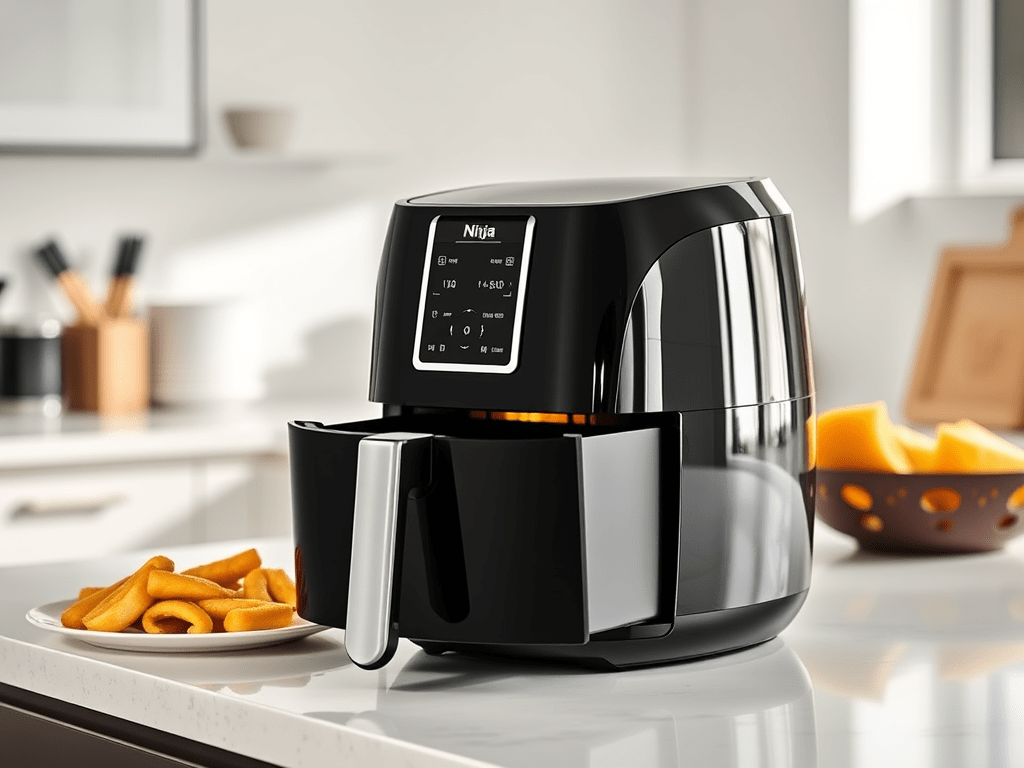
If you want an air fryer that feels easy to trust and easy to live with, the Ninja AF100UK is the safest place to start. It is not the cheapest option here, but it looks like the cleanest all-round balance of reliability, usable size, and low-friction ownership.
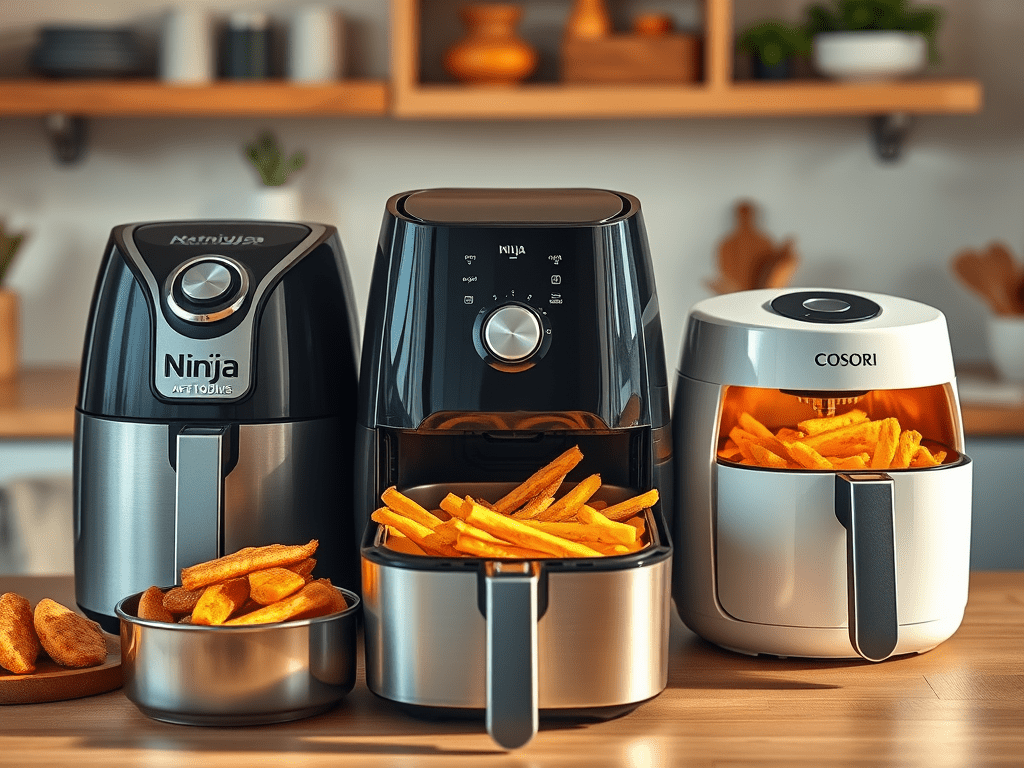
If you want to spend less without dropping into obvious compromise territory, the Russell Hobbs Satisfry Air Medium 27160 is the better value play. If you want something more compact, the Tefal Easy Fry Compact EY1458 is the cleaner alternative. If your kitchen is genuinely tiny, the COSORI Small Air Fryer 2L is the niche space-saving option, but it is not the one most people should buy first.
Best overall pick
The best air fryer if you want something reliable and easy to clean is the Ninja AF100UK.
That is not because it is the flashiest model in the field. It is because it sits in the sweet spot buyers usually want: compact enough to live with, mainstream enough to trust, and simple enough that ownership does not start feeling irritating after the first week.
For this kind of article, “reliable and easy to clean” matters more than feature count. A lot of air fryers can make chips. The more useful question is whether the appliance feels like something you will still be happy to use regularly once the novelty wears off. The Ninja makes the strongest case because it looks like the least risky all-round buy:
practical size for normal kitchens
mainstream brand confidence
simple controls
removable parts that look straightforward to clean
less obvious false-economy risk than weaker budget models
It is not the cheapest option, and it is not the most niche. That is exactly why it works so well as the main recommendation. It looks like the one most likely to keep doing the job without creating buyer regret.
The best value pick is the Russell Hobbs Satisfry Air Medium 27160.
This is the better answer for buyers who still care about reliability and easy cleaning, but do not want to pay Ninja money if they do not need to. It stays in the usable compact range and looks easier to recommend than the kind of ultra-cheap air fryer that wins on price alone and loses everywhere else.
That is what makes it a value pick rather than just a cheaper one. A good value air fryer still has to feel sensible to own:
enough size to be useful
controls that do not feel bargain-bin
a basket and interior that look manageable to clean
a lower price without obvious throwaway-appliance energy
It still is not the safest answer for everyone. If the price gap to Ninja is modest, the stronger all-round buy may still be worth the extra spend. But if the Russell Hobbs model stays clearly cheaper, it becomes a very sensible answer for buyers who want to keep the budget under control without sliding into a false economy.
The best compact alternative is the Tefal Easy Fry Compact EY1458.
This is the model for buyers who want something a bit smaller and neater without dropping straight into mini-air-fryer territory. That matters because “easy to clean” is not just about whether a basket can be washed. It is also about whether the appliance fits the kitchen properly, stores easily enough, and feels manageable in normal use.
The Tefal earns its place because it looks like a cleaner compact compromise than the tiniest models. It should suit someone who wants:
a smaller footprint than the more mainstream 4L-class machines
a digital model that still feels like a real appliance rather than a toy
an easier fit for a tighter kitchen setup
It is still not the default answer for most buyers. The narrower role is what makes it credible. You buy it because you want compact convenience without going all the way down to the most limited size class.
The best option for very small kitchens is the COSORI Small Air Fryer 2L.
This is the niche pick in the set, not the main recommendation. Its case is simple: if your kitchen space is genuinely tight, a smaller air fryer becomes much easier to justify even if you give up some flexibility.
The tradeoff is just as simple. Once you go down to 2L, you are making a more obvious capacity compromise. That can still be the right move if you mostly cook for one, make lighter portions, or just need something that fits without dominating the counter. But for a normal buyer asking for the safest reliable-and-easy-clean option, the bigger mainstream models are easier to back.
Buy the Ninja AF100UK if you want the safest overall answer.
Buy the Russell Hobbs Satisfry Air Medium 27160 if you want to spend less but still want something that looks credible as an everyday appliance.
Buy the Tefal Easy Fry Compact EY1458 if you want a cleaner compact option and do not want to jump straight into ultra-mini territory.
Buy the COSORI Small Air Fryer 2L only if space is your main problem and you are happy to accept the capacity tradeoff.
How we judged them
For this article, the important question is not just whether an air fryer works. It is whether it feels easy enough to own that you will keep using it without low-level irritation.
That means looking beyond basic cooking claims. A reliable, easy-clean air fryer should feel like a stable, low-friction appliance:
the size should make sense for a normal kitchen
the controls should not feel fiddly
the basket and removable parts should look easy to wash
the model should inspire enough confidence that it does not feel disposable
the price should still make sense for what you get
That is why the recommendations here are not based on the cheapest headline price or the longest feature list. The point is to find the air fryer most likely to stay convenient in normal life.
What actually makes an air fryer easy to live with?
The biggest mistake in this category is treating “easy to clean” as a narrow checklist item. It is part of a bigger ownership question.
An air fryer is easier to live with when:
the basket shape is easy to wash without awkward corners
the removable parts look straightforward rather than fiddly
the size fits your kitchen without becoming annoying to move or store
the controls are clear enough that using it feels obvious
the appliance inspires enough confidence that it does not feel like a short-term compromise
That is why reliability and cleaning are linked. If a model feels flimsy, irritating, or awkward every time you use it, the cleaning question stops mattering on its own. The better buy is the one that keeps friction low across the whole ownership experience.
Who should skip these and buy something bigger or different?
You should skip these if you already know you want to cook larger portions regularly, batch-cook, or avoid doing food in rounds.
You should also look elsewhere if:
you are buying for a family rather than one or two people
you want dual baskets
you want oven-style flexibility more than compact convenience
you already think a 4L-class basket sounds tight
For those buyers, the better answer is usually a larger air fryer, not the neatest compact model in this field.
Affiliate disclosure / methodology note
This page is built as a buyer guide, not a claim of hands-on ownership of every model listed here.
The recommendations are based on practical buyer criteria: brand confidence, expected cleaning friction, usable size, ease of ownership, and whether each model makes honest sense for the article brief. The aim is to recommend the appliance most likely to feel dependable and low-friction in normal use, not to reward the biggest spec sheet.
The links on this page are there to support the recommendation, not drive it. If a model does not make sense on merit, it should not make the final shortlist.
Model-by-model comparison notes
Ninja AF100UK
This is the safest starting point for most buyers because it looks like the most balanced mix of trust, usability, and manageable size. It does not need to be the cheapest to win this article. It just needs to look like the model least likely to annoy you later.
That matters because buyers in this lane are not just chasing a cooking result. They are trying to avoid buying something awkward, fiddly, or compromise-heavy. The Ninja looks like the cleanest all-round answer to that problem.
Russell Hobbs Satisfry Air Medium 27160
This is the strongest lower-cost contender because it still looks like a real everyday appliance rather than an obviously compromised budget punt. It is easier to believe as the value choice than the kind of very cheap model that only really wins on price.
Its job in the article is clear: keep enough everyday credibility that a price-conscious buyer can spend less without feeling like they bought a hassle.
Tefal Easy Fry Compact EY1458
The Tefal is here for buyers who want compactness without stepping too far down the mini route. That gives it a clear role rather than forcing it to compete directly with the main recommendation.
It makes sense if your kitchen space is a real factor, but you still want something that feels like a credible everyday appliance rather than a niche convenience machine.
COSORI Small Air Fryer 2L
The COSORI is the space-saving specialist. That is why it stays in the article, but only in a tightly defined role.
It makes sense when footprint matters more than flexibility. It does not make sense as the safest answer for most buyers, because once you go that small, the capacity tradeoff becomes part of the decision whether you like it or not.
Final recommendation summary
If you want the safest answer, buy the Ninja AF100UK.
If you want the best chance of saving money without drifting into obvious false-economy territory, buy the Russell Hobbs Satisfry Air Medium 27160.
If you want a more compact alternative that still looks credible, buy the Tefal Easy Fry Compact EY1458.
If you have a genuinely tiny kitchen and already know space matters more than flexibility, the COSORI Small Air Fryer 2L is the niche pick.
FAQ
What matters more: reliability or easy cleaning?
They are part of the same buying decision. A model that is easy to wipe down but feels flimsy or irritating to use is still not a good buy. The better answer is the one that keeps overall ownership friction low.
Is a smaller air fryer always easier to live with?
No. A smaller footprint helps, but if you go too small, the capacity compromise can become its own annoyance. The easiest model to live with is usually the one that balances size with realistic everyday use.
Should I buy the cheapest air fryer if cleaning is my main concern?
Not by default. The cheapest model can still end up being the more irritating appliance if it feels awkward, flimsy, or annoying to use. Cleaning matters, but so does the overall quality of ownership.
MDApproves may earn a commission if you buy through links on this page. That does not change what we recommend.
Short verdict
If you want a small air fryer that still feels genuinely usable for 1-2 people, the Ninja AF100UK is the safest place to start. It offers the best balance of compact size, everyday usability, and all-round confidence.
If you want to spend less, the Russell Hobbs Satisfry Air Medium 27160 is the strongest value pick. If your kitchen is genuinely tiny, the COSORI Small Air Fryer 2L is the clearer niche pick. If you want something compact without dropping all the way into ultra-mini territory, the Tefal Easy Fry Compact EY1458 is the cleaner alternative.
Best overall pick
Ninja AF100UK
The best overall pick is the Ninja AF100UK.
The main reason is that it stays compact without dropping into the “too small to be useful” problem that affects a lot of mini air fryers. For this article, that matters more than chasing the absolute smallest footprint. A small air fryer for 1-2 people still needs to handle real meals, not just snacks or reheating.
The Ninja works because it sits in the practical middle:
compact enough for a smaller kitchen
large enough to stay believable for 1-2 people
simple controls
easy-clean parts
strong mainstream confidence compared with weaker budget models
It is not the cheapest option, and it is not the tiniest either. That is fine. For most buyers, the smarter pick is the one that still feels easy to live with after the first week, not the one that only wins on shelf size.
If you want the safest all-round answer, buy the Ninja AF100UK.
The best value pick is the Russell Hobbs Satisfry Air Medium 27160.
What makes it credible is that it stays in the usable compact range. It is not just a cheap mini model pretending to work for 1-2 people. At around 4L, it is much more realistic for everyday use than the 2L-class options, while usually coming in below the Ninja on price.
That matters because a value winner in this article cannot just be the cheapest machine on the page. It has to be cheap enough to save real money, but still good enough that a normal buyer would not feel they chose the wrong size or the wrong level of appliance.
Right now the Russell Hobbs model is the clearest candidate to do that:
usable size for the article brief
lower expected price than the main overall pick
easier to recommend than a basic manual budget model
no obvious recall or safety baggage weakening the case
It is not trying to beat the Ninja on all-round confidence. The point is that it gets close enough on the things that matter most while giving budget-conscious buyers a cleaner way to spend less.
If you want the strongest value pick, buy the Russell Hobbs Satisfry Air Medium 27160.
The best tiny-kitchen niche pick is the COSORI Small Air Fryer 2L.
This is not the default answer for most people reading this guide. It is the option for buyers whose kitchen space is genuinely limited and who mostly cook smaller portions.
That matters because there is no point pretending every small air fryer suits two people equally well. A 2L model is closer to a one-person machine that can stretch when needed. If saving space is the top priority, that tradeoff can be worth it. If it is not, the Ninja or Russell Hobbs will be easier to live with.
Its biggest strength is obvious: it is easier to fit into a cramped kitchen and easier to justify if you mostly air fry snacks, sides, or light solo meals. Its main weakness is just as obvious: it is easier to outgrow.
If your kitchen is genuinely tiny, buy the COSORI Small Air Fryer 2L.
The compact alternative is the Tefal Easy Fry Compact EY1458.
This one makes sense for buyers who want something smaller than the 4L-class models, but do not want to drop all the way into awkward, ultra-mini territory. It gives the article a cleaner UK-facing compact option without relying on messy US-led naming or weak merchant paths.
It is still not the safest answer for most 1-2 person buyers. The reason to choose it is simple: you want a smaller digital model, you still want something that feels usable, and you want a cleaner buying path than some of the more awkward compact alternatives.
If you want a compact alternative that still feels usable, buy the Tefal Easy Fry Compact EY1458.
Buy the Ninja AF100UK if you want the safest all-round choice.
Buy the Russell Hobbs Satisfry Air Medium 27160 if you want to spend less but still want something realistically usable for 1-2 people.
Buy the COSORI Small Air Fryer 2L if your kitchen is genuinely tiny and you already know you are trading capacity for footprint.
Look at the Tefal Easy Fry Compact EY1458 if you want something more compact than the main picks, but still want a cleaner UK-facing model choice.
How we judged them
For this article, the main test was simple: which models are actually small enough to make sense in a smaller kitchen, but still usable enough that a normal buyer cooking for 1-2 people would not regret going too small.
That matters because this category is full of products that sound convenient on paper but start to feel cramped once you move beyond snacks, reheating, or single-person use. So the models here were judged less on gimmicks and more on whether they make practical sense day to day.
The main things that shaped the recommendations were:
whether the capacity is honest for 1-2 people
whether the footprint is compact without becoming too compromised
how easy the basket, controls, and cleaning look in real use
how much confidence the model inspires versus weaker budget alternatives
whether the price actually buys something useful, rather than just a badge or a feature list
That is why the 2L-class models stay in the article, but only as niche options. They are small, but they are not the safest answer for most readers coming in through this title.
What matters most in a small air fryer
The most important thing is not whether an air fryer is tiny. It is whether it is small enough for your kitchen but still large enough to be worth owning.
For most people, the sweet spot is not the absolute smallest model available. It is a model that stays compact while still giving you enough basket space to cook normal food without constant compromise. That usually matters more than shaving off a bit of counter space.
The biggest things to care about are:
real usable capacity, not just the headline litre number
a footprint that fits your kitchen without forcing you into a solo-only machine
easy cleaning, because annoying cleanup kills repeat use fast
simple controls and low-friction everyday use
enough confidence in the model that you are not buying a cheap problem
If you mostly cook for one, or you have genuinely tiny space, the smallest models can make sense. But if you are shopping for 1-2 people in normal use, underbuying is a bigger risk than slightly oversizing.
Who should skip these and buy a larger model instead
If you regularly cook full meals for two hungry adults, batch-cook, or want to fit larger items without cutting everything down, you should probably skip this category and buy a larger air fryer instead.
This article is aimed at buyers who want something compact and practical. It is not aimed at people trying to replace a full-size oven workflow. If you want to cook bigger portions, do multi-part meals in one go, or avoid cooking in rounds, a larger basket or dual-basket model will make more sense.
You should also skip this category if:
you know you will be cooking for more than two people often
you want maximum flexibility more than compact size
you already think the 4L range sounds tight
In those cases, buying small just because the article says “small” is the wrong move.
Affiliate disclosure / methodology note
This page is built as a buyer guide, not a claim of hands-on ownership of every model listed here.
The recommendations are based on practical buyer criteria: size, expected usability, cleaning friction, brand/model confidence, and whether each option makes honest sense for the article brief. Models with safety or recall concerns are not treated as smart value picks just because they are cheap.
The links on this page are there to support the recommendation, not drive it. Amazon UK is the merchant path used for this article because it is the cleanest fit for the current stack, but the recommendation still has to make sense on merit first.
Model-by-model comparison notes
Ninja AF100UK
This is the safest starting point for most readers because it feels like a genuine small air fryer, not a compromise machine. The size is practical for a smaller kitchen, but still usable enough for real 1-2 person meals. It also has the cleanest balance of everyday usability and mainstream confidence in the current field.
The tradeoff is straightforward: it is not the cheapest option, and it is not the smallest. That is exactly why it works so well for this article. It is the model least likely to leave a buyer feeling they underbought.
Russell Hobbs Satisfry Air Medium 27160
This is the clearest value play because it stays in the usable compact range while likely coming in below Ninja on price. That makes it a real value candidate, not just a cheaper option for the sake of it.
There is still one caution. The model only deserves the value slot if it gets close enough to Ninja on real-world confidence and day-to-day use. If the savings are real and the drop-off is modest, it is the smart cheaper buy. If the gap is too obvious, it should stay a contender rather than a forced winner.
COSORI Small Air Fryer 2L
This is the right pick only when space is the main problem you are trying to solve. If your kitchen is genuinely cramped and you mostly cook for one, or only occasionally stretch to two lighter portions, the COSORI makes more sense than the larger 4L-class models.
The tradeoff is clear and should stay clear in the article. You are buying footprint first and capacity second. That is why it works as the tiny-kitchen pick, but not as the safest answer for most readers. It earns its place by being easier to fit and easier to justify in a genuinely small-space setup, not by pretending to be the most versatile option here.
Tefal Easy Fry Compact EY1458
The Tefal sits in the useful middle between the genuinely tiny COSORI and the more forgiving 4L-class picks. That gives it a clean role in the article: the compact alternative for buyers who want something smaller than the main recommendations, but not so small that they immediately feel boxed in.
It still is not the strongest answer for most people. The reason to choose it is narrower than that. It works if you want a smaller digital model, want a cleaner compact form factor, and do not want to jump all the way down to a niche 2L machine. That makes it a real alternative rather than filler, but still not a co-winner.
Tower Vortx 4L Manual Air Fryer T17061BLK
On size and price alone, this would be a tempting budget option. That is why it needs to stay excluded rather than left floating in the comparison.
Once recall or safety risk becomes part of the decision, the low price stops looking like a smart tradeoff. For this article, that is enough to take it out of recommendation contention.
Final recommendation summary
If you want the safest answer, buy the Ninja AF100UK.
If you want the best chance of saving money without dropping into a too-small mini model, buy the Russell Hobbs Satisfry Air Medium 27160.
If your kitchen is genuinely tiny or you are really buying for one person most of the time, the COSORI Small Air Fryer 2L can still make sense. If you want a compact digital alternative with cleaner UK naming, the Tefal Easy Fry Compact EY1458 is the better backup pick.
Skip the Tower option. Cheap stops being clever once safety confidence drops.
FAQ
Is a 2L air fryer big enough for 2 people?
Usually not as a default recommendation. It can work for light portions, snacks, or mostly solo use, but for a normal 1-2 person article it is safer to treat 2L models as niche options rather than the main answer.
What size small air fryer makes the most sense for 1-2 people?
The more believable range is the compact 3.5L to 4L zone. That is where you still get a smaller-kitchen footprint without sliding too far into solo-only capacity.
I’m pretty sure I have undiagnosed ADHD. Throughout my life, I’ve always felt different—like I wasn’t built for the rigid, structured way society expects people to operate.
I struggled with motivation when something didn’t interest me, yet when I found something that engaged me, I could hyperfocus and excel beyond expectations. Organization never looked like neat, color-coded planners for me—it was more like organized chaos, a system that made perfect sense to me but looked messy to everyone else.
Traditional learning methods bored me to death, and I’ve always learned best by diving in and figuring things out myself. Now, at 31, I’ve managed to formulate a set of strategies that have helped me thrive. I’ve learned how to work with my brain rather than against it, and I want to share what’s worked for me in the hopes that it can help others who think like I do.
This guide will help you harness ADHD as your superpower, optimizing motivation, learning, organization, career success, and daily routines in a way that aligns with how your brain naturally operates.
I’m sharing this guide because I wish I’d had it when I was struggling to understand my brain. If any of this resonates with you, I’d love to hear your story in the comments—let’s learn from each other!
A Quick Note on ADHD and This Guide
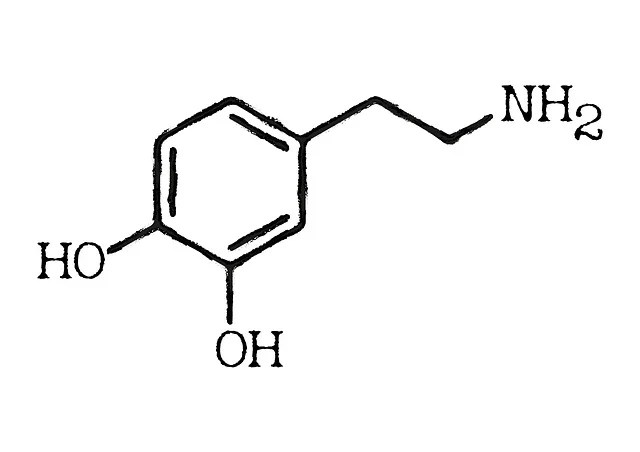
While I share strategies that have worked for me as someone who suspects they have undiagnosed ADHD, I recognize that ADHD is a spectrum, and what works for one person may not work for another. Research shows that ADHD brains often have lower baseline dopamine levels, which is why we crave novelty, urgency, and rewards (Volkow et al., 2011). My goal is to offer ideas you can experiment with, but if you’re struggling, consider seeking a professional diagnosis, as it can open up additional tools like therapy, medication, or workplace accommodations. Whether you’re diagnosed, undiagnosed, or just curious, I hope this guide helps you find what works for your unique brain.
1. Motivation Strategies: Hacking Your Brain’s Reward System
Motivation is one of the biggest ADHD hurdles, but it’s not about willpower—it’s about dopamine. ADHD brains struggle with delayed gratification but thrive on immediate rewards, urgency, and interest. Here’s how to stay engaged even with boring tasks:
The INCUP Framework
Leverage the “INCUP” Motivators:
Interest: Find something fun in the task (e.g., if you need to write a report, pretend you’re writing a viral blog post instead).
Novelty: Change locations, tools, or formats (e.g., switch from typing to voice notes or work in a coffee shop instead of your desk).
Challenge: Set mini-challenges (e.g., “Can I finish this spreadsheet in 20 minutes?” and set a timer).
Urgency: Create artificial deadlines (e.g., tell a coworker you’ll send them the draft in an hour so you have external pressure).
Passion: Connect tasks to a bigger goal (e.g., if answering emails feels dull, remind yourself how they help build your reputation and career growth).
Breaking Tasks Into “Quick Wins” to Build Momentum
Start with a micro-task (e.g., “Write one sentence” instead of “Write a full report”).
Reward progress immediately (e.g., allow yourself a small treat or a 5-minute social media break after completing a task).
Use a “dopamine anchor”—pair a boring task with something enjoyable (e.g., listen to your favorite music while doing paperwork).
🚀 Pro Tip: If you thrive under pressure, create fake urgency: Set a timer for 10 minutes and race the clock.
Try This Now: Pick one task you’ve been avoiding, break it into a micro-task (e.g., “Write one sentence”), and do it right now. Share your win in the comments below!
When Motivation Feels Impossible
If even micro-tasks or artificial deadlines feel overwhelming, you’re not alone—severe executive dysfunction is a common ADHD challenge. In these cases, try pairing tasks with a “body double”—someone who sits with you while you work, providing accountability without judgment. Alternatively, consider breaking tasks into “pre-tasks” (e.g., “Open my laptop” instead of “Write a sentence”) to build momentum. If motivation remains a major hurdle, a professional coach or therapist specializing in ADHD can help tailor strategies to your needs.
ADHD brains thrive on immediate rewards, urgency, and interest—use INCUP to hack your motivation.
2. Learning Techniques: Ditch Traditional Methods & Learn By Doing
Textbooks and lectures aren’t designed for ADHD minds. We learn best by experiencing, experimenting, and engaging multiple senses.
Best ADHD-Friendly Learning Methods:
Active, hands-on learning: Instead of reading about a skill, use it (e.g., if you’re learning coding, build a small project instead of just reading tutorials).
Gamification: Turn learning into a game (e.g., use apps like Duolingo for language learning, or Quizlet for flashcards with points and rewards).
Multi-sensory techniques: Watch videos, listen to podcasts, draw mind maps, or use physical models (e.g., use LEGO to visualize engineering concepts).
Teach what you learn: Explaining something forces deeper understanding (e.g., explain a complex concept to a friend or record yourself summarizing it).
🚀 Pro Tip: If something doesn’t stick, try a different format (watch it, hear it, act it out). Your brain craves variety.
For Inattentive Types If you find your mind wandering even during hands-on learning, try using sensory tools to anchor your focus. For example, listening to white noise, instrumental music, or even chewing gum can help inattentive ADHD brains stay engaged. Experiment to find what works for you.
Traditional Learning
ADHD-Friendly Learning
Reading textbooks
Building projects
Listening to lectures
Watching videos
Taking notes
Drawing mind maps
ADHD brains learn best by doing, not just reading or listening.
3. Organization & Productivity: Thriving in “Organized Chaos”
ADHD minds don’t operate in a tidy, linear way—so stop forcing yourself into rigid systems that don’t work. Instead, embrace structured flexibility.
Creating an ADHD-Friendly Organization System
Out of sight, out of mind? Use clear bins, open shelves, or sticky notes to keep important things visible (e.g., keep keys in a brightly colored bowl by the door).
Messy but functional? Use designated “dump zones” (e.g., have a bin for papers you need to go through later, instead of trying to keep a perfectly clean desk).
Forget traditional to-do lists? Try mind maps, voice notes, or Kanban boards instead (e.g., use Trello to visually organize tasks rather than writing them in a planner).
Productivity Hacks That Work for ADHD Brains
Master Dump List: Brain-dump everything in no particular order, then pick the top three priorities daily (e.g., write all tasks on a whiteboard and highlight today’s must-dos).
Time Blocking with Flexibility: Assign “work modes” instead of strict times (e.g., “Deep Work” from 9-11 AM but decide what task in the moment).
External Reminders: Use alarms, Post-it notes, or digital task managers to offload memory (e.g., set a phone reminder for meeting times and important deadlines).
🚀 Pro Tip: Use the “2-Minute Rule”—if a task takes less than 2 minutes, do it immediately instead of adding it to a list.
Try This Now: Pick one small task (e.g., reply to one email) and use the 2-Minute Rule to do it right now. Share how it felt in the comments below!
Stop fighting your brain—build systems that work with your natural chaos.
Final Thoughts: ADHD as a Superpower, Not a Weakness
ADHD isn’t a deficit—it’s a different way of operating in the world. When you stop trying to fit into neurotypical molds and start building systems that align with your strengths, everything changes.
You don’t need to “fix” yourself. You need to optimize your environment and strategies to work with your brain, not against it. By leveraging motivation hacks, hands-on learning, adaptive organization, strategic communication, and structured flexibility, you can turn ADHD into a competitive advantage in life, work, and learning.
🚀 Embrace your superpower. The world needs more minds like yours.
This guide is just the start—I’m building a community of people who think differently, and I’d love for you to be part of it. Share your thoughts, struggles, or wins in the comments, or join my newsletter for more ADHD-friendly tools and resources.
Tools That Support Your ADHD Brain One of my favorite tools—learn more below!
One of the most game-changing tools I’ve found for staying motivated, focused, and clear-headed is Spacegoods’ Rainbow Dust. This blend of natural ingredients has helped me feel like my brain is working ‘normally’ by keeping my energy steady throughout the day—without the crashes I used to get from coffee or sugar. If you’re curious, you can check it out here. Full disclosure: I earn a small commission if you purchase through this link, but I only recommend products I genuinely believe in, and this one has been a lifesaver for me. That said, supplements aren’t for everyone, so experiment to find what works for you—whether it’s a product like this, regular exercise, a high-protein diet, or mindfulness practices.
Want more ADHD-friendly strategies? Leave a comment to let me know, and I’ll share more tips!
What’s your favorite ADHD hack? Share it in the comments below—I’d love to learn from you!
In a world of never-ending to-do lists and constant mental strain, the promise of sharper focus, better memory, and stress relief sounds like a miracle. Enter adaptogens — herbs and mushrooms like ashwagandha, rhodiola, lion’s mane, and ginseng that have been used for centuries and are now piquing scientific interest. But can these natural remedies truly tune up our brainpower? Let’s explore the science behind adaptogens and how they might help us think clearer and stress less.
What Are Adaptogens and How Do They Work?
Adaptogens are often described as nature’s stress vaccines. By definition, an adaptogen is a plant (or mushroom) extract that is non-toxic, helps the body cope with stress, and restores balance (homeostasis). Instead of a quick jolt like caffeine, adaptogens work more subtly: they moderate the body’s stress response. If stress hormones like cortisol are too high, an adaptogen may help tone them down; if they’re too low, it may nudge them up toward normal. In other words, adaptogens act a bit like a thermostat, keeping our stress physiology in an optimal range.
From a biochemical perspective, adaptogens appear to influence the hypothalamic–pituitary–adrenal (HPA) axis, which governs how we react to stress. They can adjust levels of key mediators like cortisol and even cellular stress proteins like Hsp70. This helps increase our “non-specific resistance” — the ability to resist stressors without crashing. Notably, studies have shown that many adaptogens have neuroprotective, anti-fatigue, antidepressant, and nootropic (cognition-enhancing) effects. They essentially help the brain and body “adapt” under pressure, improving mental endurance and resilience.
It’s important to note that adaptogens aren’t magic cure-alls. As the Cleveland Clinic puts it, they can act as a “temporary bandage” — helping mitigate stress in the moment — but they won’t erase the root causes of chronic stress. Think of them as helpers that nudge you back toward equilibrium, ideally while you also address lifestyle factors. And crucially, by definition they must be safe and well-tolerated in normal doses. This safety profile is part of what makes them attractive as daily supplements for wellness and cognitive optimization.
Science-Backed Benefits: Stress, Focus, and Memory Boosts
Modern research is starting to back up some of the traditional claims around adaptogens. Clinical trials and lab studies suggest these herbs can indeed influence our minds in measurable ways. For instance, a comprehensive review in the journal Pharmaceuticals noted that adaptogens can increase mental work capacity under stress, reduce fatigue, and improve attention. In animal experiments, they’ve shown neuroprotective effects, guarding brain cells against stress-related damage. Another review described adaptogens’ unique “dual action” of calming anxiety while boosting mental performance, providing both immediate and long-term cognitive benefits. Let’s shine a spotlight on four of the most popular adaptogens and see what science says about each.
Ashwagandha — The Stress-Soothing Memory Booster
Ashwagandha (Withania somnifera) is a revered herb in Ayurveda, long used to bolster resilience. Modern science is exploring its calming and brain-boosting effects.
Ashwagandha root is often called “Indian ginseng” for its rejuvenating properties. If you feel mentally fried by stress, ashwagandha might be your friend. Research shows it can lower cortisol levels and anxiety, effectively taming the body’s stress response. Intriguingly, it may also sharpen your cognition once that stress is under control. In a double-blind, placebo-controlled trial, middle-aged adults who took 300 mg of ashwagandha twice daily for 8 weeks showed significant improvements in memory, executive function, attention, and information processing speed compared to placebo. They literally performed better on cognitive tests after two months of ashwagandha use. Another study found healthy volunteers taking 600 mg daily had better short-term and long-term memory and sustained attention after 12 weeks.
What’s behind these brain benefits? Ashwagandha is rich in compounds called withanolides that have antioxidant and anti-inflammatory effects in the brain. By reducing oxidative stress and inflammation, ashwagandha helps protect neurons from damage. It has even been shown to promote the growth of nerve cells: in animal studies, ashwagandha extracts increased levels of brain-derived neurotrophic factor (BDNF) and stimulated the regeneration of axons and dendrites — the wiring of brain cells. This neurotrophic effect could explain improvements in learning and memory seen in lab models.
Excitingly, ashwagandha isn’t just for those who are stressed out; it may help people with mild cognitive impairment (sometimes a precursor to dementia). In one trial, 50 adults with mild cognitive impairment took 300 mg twice a day, and after 12 weeks they showed marked improvements in memory and executive function versus placebo. Those are early findings, but they hint that ashwagandha’s blend of stress reduction and brain revitalization might slow cognitive decline in its early stages. At the very least, feeling less anxious and more balanced can clear the mental fog and help you focus on tasks at hand — and ashwagandha has some of the strongest anxiety-relieving data among adaptogens.
Rhodiola Rosea — Fighting Fatigue and Brain Fog
Rhodiola rosea (golden root) growing in the wild. This hardy adaptogen from Arctic regions is famed for enhancing endurance — both physical and mental.
Rhodiola rosea, or “golden root,” is like the reliable stamina herb. It grows in harsh high-altitude climates, and in the body it seems to confer a bit of that hardy resilience. Rhodiola is best known for combating fatigue — not by revving you up, but by helping you sustain energy and focus when you’d otherwise hit a wall. In one classic trial, physicians working night shifts (a scenario of acute stress and fatigue) took rhodiola extract before their duties and saw reduced mental fatigue and better performance on cognitive tests during the night duty, compared to placebo. Other studies with students and military cadets under stress have likewise found that rhodiola can improve concentration, reduce exhaustion, and boost mental work capacity under strain.
Beyond subjective reports, controlled studies indicate rhodiola may directly enhance certain cognitive functions. A review of clinical trials concluded that Rhodiola supplements improved aspects of mental performance — especially concentration and speed of cognitive processing — in healthy adults experiencing stress and fatigue. Notably, rhodiola tends to work quickly. Some studies used short-term dosing (just days or weeks) and still observed benefits in fatigue reduction and mental clarity, suggesting rhodiola could be a fast-acting adaptogen when you need a mental lift without the jittery edge.
Mechanistically, rhodiola’s active components (like rosavin and salidroside) are thought to influence brain chemistry. There’s evidence that rhodiola can prolong the action of neurotransmitters such as dopamine and serotonin by preventing their breakdown. By keeping these mood and focus-related brain chemicals around longer, rhodiola provides a mental steady fuel. It’s also an antioxidant and may help curb stress-induced inflammation in the brain. The result is a unique combo: rhodiola tends to calm anxiety while lifting mental energy — you feel less frazzled and more alert. No wonder Stanford neuroscientist Dr. Andrew Huberman takes rhodiola rosea in his personal supplement stack to help handle stress and maintain focus. It’s a favored adaptogen for students, athletes, and anyone who needs to stay sharp through a mentally or physically demanding day.
Lion’s Mane — The Mushroom for Memory and Nerve Growth
Lion’s mane mushroom (Hericium erinaceus) — an edible fungus that looks like a pom-pom or a shaggy lion’s mane. Research suggests it contains compounds that spur nerve growth.
Lion’s mane is the oddball on this adaptogen list — it’s not a plant root but a medicinal mushroom. With its white, icicle-like threads, lion’s mane has a long history in East Asian medicine as a tonic for the brain and nerves. Modern interest exploded when researchers discovered that lion’s mane stimulates the production of nerve growth factor (NGF), a molecule that helps neurons grow and stay healthy. This mushroom’s unique hericenone and erinacine compounds can actually promote the outgrowth of neurites (the projections of neurons) in cell cultures, essentially encouraging new connections in the brain. That’s a big deal for potentially enhancing learning and memory.
Preclinical studies back up lion’s mane’s brain-boosting reputation. For example, when healthy mice were supplemented with lion’s mane, their brain tissue showed increased NGF gene expression in the hippocampus (a memory center) along with improved performance on memory tests. In mouse models of Alzheimer’s disease, lion’s mane extracts reduced beta-amyloid plaque burden and inflammation, leading to better cognitive function in the mice. These neuroprotective effects have spurred small human trials.
One noteworthy clinical study in Japan recruited 30 older adults with mild cognitive impairment (MCI). They took a high dose (3 grams a day) of lion’s mane mushroom powder for 16 weeks. The result: their scores on a cognitive function scale significantly improved compared to the placebo group. Impressively, their gains started to fade after they stopped taking the supplement, suggesting the lion’s mane was indeed doing something tangible for their memory. Another trial found that even cognitively healthy adults in their 50s and 60s improved their Mini-Mental State Exam scores (a general test of cognitive function) after 12 weeks of lion’s mane (3.2 g/day). Though oddly, in that study lion’s mane didn’t outshine placebo on some more specific memory tests — highlighting that more research is needed to pinpoint its effects.
Fans of lion’s mane often report it helps clear up “brain fog” and improves focus. While large-scale studies are still lacking, the existing evidence is promising enough that nutrition experts take note. “I am a huge fan of Lion’s Mane,” says nutritionist Sarah Carolides. “It supports cognitive function, memory… Lion’s Mane can also help support regeneration of nervous tissue.”
Indeed, the idea of a fungal nootropic that can repair brain cells is compelling. Lion’s mane is being investigated not just for everyday cognitive support but for potential therapeutic effects in dementia, nerve injuries, and even mood disorders (some research hints at anti-depressant and anti-anxiety effects). So if you’re looking for a coffee alternative for concentration or a memory supplement, this adaptogenic mushroom is a prime candidate.
Ginseng — Ancient Energy for Mental Clarity
Cultivated ginseng roots on display. Panax ginseng (Asian ginseng) has been used for millennia as a vitality tonic — modern trials find it can sharpen certain mental abilities.
When it comes to famous herbs, ginseng tops the list. Panax ginseng (Asian ginseng) has a legendary status in traditional Chinese and Korean medicine as an all-purpose revitalizer. For cognitive enhancement, ginseng brings a blend of mental energy and clarity. Research indicates that ginseng can improve aspects of working memory, attention, and mental processing, especially in fatigued or middle-aged individuals. In one systematic review of clinical trials, healthy people given Panax ginseng showed significant improvements in cognitive function compared to those given placebo.
Even acute dosing of ginseng can have measurable effects. For example, young adults who took a single dose of 400 mg Panax ginseng had better speed and accuracy on certain memory tasks within a few hours. But the benefits aren’t just short-lived. A recent placebo-controlled study of 52 healthy individuals found that taking 1 gram of ginseng daily for 8 weeks led to improved scores on attention, memory, and executive function tests. Brain imaging in that study even showed an increase in the volume of a brain region critical for memory in the ginseng group. In other words, ginseng not only boosted cognition, it appeared to enhance brain structure — a hint at its neurotrophic potential.
Ginseng has also been studied in people with cognitive impairments. Some trials in Alzheimer’s disease patients found that high doses (4.5–9 g/day) of Panax ginseng, when taken for 12 weeks or more, improved cognitive test scores relative to baseline. The effect seemed to plateau after a few months and gradually diminished when ginseng was discontinued. This suggests continuous use might be needed to maintain the benefits. While these studies are preliminary and sometimes methodologically limited, they align with ginseng’s age-old use as a brain tonic.
From a mechanism standpoint, ginseng’s active molecules (ginsenosides) have diverse effects: they modulate neurotransmitters, protect neurons from oxidative stress, and even support cerebral blood flow. One interesting effect is that ginseng can help regulate blood sugar levels and energy metabolism in the brain, which might prevent the energy “crashes” that impair focus. Combined with its mild stimulant effect, this makes ginseng somewhat analogous to caffeine but more balanced. In fact, ginseng has been noted to prolong the action of stress neurotransmitters like adrenaline, giving a sustained alertness boost.
It’s worth noting not all studies show huge cognitive gains with ginseng — some early Cochrane reviews deemed the evidence inconsistent or insufficient. But overall, current evidence suggests Panax ginseng can enhance mental performance under certain conditions (especially fatigue or aging). Given its long track record of safe use, ginseng remains a popular natural choice to “charge up” mentally. As part of a daily routine, it may help you feel a steadier energy and focus compared to just relying on coffee alone.
Adaptogens vs. Caffeine: Different Paths to Alertness
By now you might wonder: if adaptogens can boost energy and focus, how do they compare to our go-to stimulant, caffeine? The key difference lies in how they achieve the effect. Caffeine, found in coffee and tea, forces the issue — it stimulates the central nervous system, blocks sleep signals, and triggers a release of adrenaline and cortisol (the fight-or-flight hormones). This results in a quick spike in alertness and mood. However, the surge is often followed by a crash a few hours later when the caffeine wears off and accumulated adenosine (the sleepiness molecule) floods our receptors. Many of us know the cycle: cup of coffee, burst of focus, then an afternoon slump and perhaps some jitters or anxiety if we overdo it.
Adaptogens take a gentler, root-cause approach. Instead of blasting our nerves with stimulation, they increase energy by enhancing the body’s resilience and balancing hormones. For example, rather than directly blocking adenosine, adaptogens support the adrenal glands and HPA axis to normalize cortisol output over time. So if you’re stressed and drained, an adaptogen like ashwagandha can help bring cortisol down to a healthier level, which paradoxically leaves you feeling more energized and clear-headed (stress can be exhausting, after all). On the flip side, if you’re chronically fatigued with flat cortisol, adaptogens may gently raise it. This bidirectional balancing act leads to a smoother improvement in energy without the spikes and dips. As one wellness expert explains, “Instead of temporarily blocking receptors, they work with the body to balance stress hormone levels, enhance stress recovery and improve alertness — creating a lasting effect on fatigue and stress reduction.”.
In practice, many people actually combine adaptogens with caffeine for synergistic effects. Adaptogenic coffee blends are a rising trend, adding herbs like lion’s mane or ashwagandha to your java. The idea is that adaptogens can buffer some of caffeine’s downsides — reducing jitteriness and preventing the cortisol spike that leads to crashes. You get the focus from caffeine, but the adaptogen helps you feel calm and focused rather than wired. One product developer noted that ashwagandha in a coffee blend “ensures we get the benefits from coffee whilst minimising any side effects,” keeping energy levels more stable. From jitters to zen, indeed.
Of course, if you’re very caffeine-sensitive, adaptogens might be a healthier alternative entirely. They lack the immediate buzz of caffeine, but their adaptogenic effect can mean better overall energy throughout the day. No afternoon crash, no insomnia at night from a late cup. It’s more of a sustained resilience. Think of caffeine as a sprint and adaptogens as a marathon — both can get you moving, but one is quick burnout and the other is steady endurance. Interestingly, using both might offer the best of both worlds for some: quick alertness plus long-lasting stress protection. (Just be mindful of timing and dosage if pairing them, as we’ll discuss next.)
Using Adaptogens Safely and Effectively
If you’re considering adaptogens for cognitive enhancement, how should you go about it? First off, patience is key. Unlike a stimulant, most adaptogens need to be taken consistently for a few weeks to reveal their full benefits. Experts often suggest daily use for at least 4–12 weeks; many clinical trials, like those on ashwagandha and lion’s mane, used a 8–16 week duration to measure improvements. Some people report feeling a difference within days, but adaptogens generally have a cumulative effect — they gently tune your stress response over time.
Dosage varies by the herb and the extract potency. In studies, ashwagandha root extract is commonly given around 300–600 mg per day, split into two doses. Rhodiola rosea extracts are often used in the range of 200–400 mg per day (with about 3% rosavin content), sometimes taken earlier in the day due to its energizing effect. Lion’s mane is typically consumed in higher amounts — often 500 mg to 3,000 mg (3 g) per day of the dried mushroom or extract — with cognitive studies using the upper end (3 g) for memory support. Panax ginseng dosages can range widely; a common regimen is 200–400 mg of a standardized extract, or 1–3 grams of the dried root daily. In Alzheimer’s trials, much higher doses (4.5 to 9 g) were used, but for healthy adults lower doses are typically sufficient to aid mental performance. Because products vary, it’s wise to follow the manufacturer’s guidelines or consult a knowledgeable healthcare provider for personalized advice.
Timing matters as well. Adaptogens that are more stimulating — like rhodiola or ginseng — are best taken in the morning or early afternoon, so they don’t inadvertently keep you up at night. (They don’t contain caffeine, but by improving your stress tolerance and energy, they can feel activating. Some users report rhodiola, for instance, can interfere with late-day relaxation if taken too late.) On the other hand, ashwagandha is actually somewhat calming for many people. Taking it in the evening can even aid sleep quality, thanks to its cortisol-lowering, anxiolytic effect. Lion’s mane seems neutral; some take it in the morning for brain support, while others include it in an evening routine. Pay attention to how your body reacts and adjust accordingly. Remember, the goal is to work with your body’s rhythms — as adaptogens themselves do.
One more thing: quality and interactions. Because adaptogens have become popular, the supplement market is crowded. Choose reputable brands to ensure you’re getting the real herb in effective concentrations. Sadly, products like rhodiola have faced issues with adulteration or poor quality control in some cases. Look for third-party tested supplements.
In terms of safety, adaptogens are generally very well tolerated, especially at recommended doses. Reported side effects are rare and tend to be mild, such as digestive upset (nausea, stomach ache), or headache. Allergic reactions are possible but uncommon. That said, each adaptogen is unique. Ginseng, for example, if taken in high doses or alongside other stimulants, can cause insomnia, rapid heartbeat, or blood pressure changes in some individuals. It can also interact with medications (like blood thinners and diabetes drugs)
. Ashwagandha is quite gentle, but very large doses might cause drowsiness or upset stomach. Rhodiola has an excellent safety record, with only a few isolated reports of jitteriness or insomnia (usually when taken late in the day). Lion’s mane appears safe, though as a mushroom it could cause issues for those with mushroom allergies.
The bottom line: check with your healthcare provider if you have any medical conditions or take medications, just to be sure there are no conflicts. For instance, if you’re on thyroid medication or antidepressants, note that adaptogens could affect thyroid activity or neurotransmitters. Safety first — an adaptogen regimen should be personalized, especially if you’re managing health conditions.
Finally, consider the combinations that might amplify benefits. Some formulations blend multiple adaptogens, aiming for a synergistic effect — for example, a stress relief blend might pair ashwagandha with rhodiola, leveraging one’s calming and another’s energizing effects. Users also experiment with stacking adaptogens alongside other nootropics. Dr. Huberman, for instance, combines adaptogens with compounds like alpha-GPC (a choline donor for focus) and says this combo helps him sustain concentration for hours. Even nutrition baristas are adding adaptogens to beverages (recall the adaptogenic coffee trend) to yield an “alert yet tranquil” state. When starting out, though, it’s wise to introduce one adaptogen at a time — that way you can gauge its effects on you before mixing and matching.
Conclusion: Ancient Herbs in the Modern Mind Hack Toolkit
Adaptogens bridge ancient herbal wisdom with cutting-edge neuroscience. The idea that a root or mushroom can help buffer stress and boost brain function is no longer just folklore — it’s increasingly supported by reputable studies and expert practitioners. These plant allies like ashwagandha, rhodiola, lion’s mane, and ginseng each bring their own strengths, from calming frazzled nerves to sharpening memory and focus. They tend to work in the background, nudging our bodies toward balance, rather than bulldozing our biology as stimulants do. This means their effects might be subtle at first, but potentially profound over time — a steadier mood, a quicker recall, a feeling that you’re handling life’s chaos with a bit more grace and clarity.
Of course, adaptogens are not a panacea. You won’t turn into a genius overnight or become invincible to burnout just by taking a capsule of herb powder. Think of them as assistants in your overall health and productivity routine. Paired with good sleep, a healthy diet, exercise, and maybe your morning coffee, adaptogens can be one more tool in your toolkit for cognitive optimization. As research continues, we’ll better understand exactly how to use these fascinating substances — the optimal doses, timing, and combinations for specific benefits. So far, the journey looks promising, and it’s a journey that combines the best of both worlds: nature’s ancient pharmacy and modern science.
In the end, the allure of adaptogens is about resilience. In a high-pressure world, who wouldn’t want a bit of extra armor against stress and a botanical boost for the brain? With a sensible approach and mindful use, adaptogens just might help you adapt your way to a clearer, calmer, and more focused you — naturally.
The Ultimate Coffee Alternative: Adaptogenic Blends
Spacegoods’ Rainbow Dust is an adaptogenic coffee alternative
If you’re looking for a way to transition away from caffeine, you don’t have to ditch your morning ritual entirely. Spacegoods’ Rainbow Dust is an adaptogenic coffee alternative featuring Lion’s Mane, Rhodiola, and Ashwagandha — all in a delicious, easy-to-mix formula.
I tested Spacegoods’ Rainbow Dust for myself, swapping coffee for this adaptogenic blend. The result? More sustained energy, zero jitters, and a sharper mind. Read my full experience here: I Swapped Coffee for Spacegoods.
Interested in trying it yourself? Get Spacegoods’ Rainbow Dust here: Exclusive Discount Link
Sources:
Panossian, A., & Wikman, G. (2010). Pharmaceuticals, 3(1), 188–224 — Review on adaptogens’ anti-fatigue, nootropic, and stress-protective effects.
Cleveland Clinic — “Adaptogens” (Health Library, 2022) — Definition, criteria (non-toxic, stress reduction, homeostasis); safety and side effects.
Choudhary et al. (2017). Journal of Dietary Supplements — Ashwagandha 300 mg twice daily in adults improved memory, attention, and information processing vs placebo.
Pingali et al. (2014). Pharmacognosy Research — Ashwagandha 600 mg daily for 12 weeks enhanced memory and sustained attention in healthy volunteers.
Singh et al. (2016). Journal of Ayurveda and Integrative Medicine — Ashwagandha 600 mg/day for 12 weeks improved cognitive function in mild cognitive impairment.
Florentine et al. (2024). International Journal of Herbal Medicine — Ashwagandha’s neuroprotective effects: reduces brain inflammation, boosts BDNF, and promotes neuron growth (animal studies).
Hung et al. (2011). Phytomedicine, 18(3–4), 235–244 — Systematic review of Rhodiola rosea RCTs: indicates benefits for physical and mental performance under stress.
Form Nutrition (2021) — Nutritionist quote on Lion’s Mane supporting cognitive function and nerve tissue regeneration
Mori et al. (2009). Phytotherapy Research — Lion’s mane 3g/day for 16 weeks in MCI patients improved cognitive scores on HDS-R (a dementia scale) vs placebo.
Saitsu et al. (2019). — Lion’s mane 3.2g/day for 12 weeks in healthy older adults improved MMSE scores compared to placebo.
Alzheimer’s Drug Discovery Foundation — Cognitive Vitality Profile: Panax Ginseng (2020) — RCT: ginseng 1g/day for 8 weeks improved memory, attention, executive function and increased hippocampal volume; meta-analyses show ginseng is generally safe with no serious adverse effects.
Cochrane Review (2010) — Noted no conclusive evidence for ginseng’s cognitive benefits at the time (more recent studies show positive trends).
Dr. Frank Lipman (2022) — Adaptogens vs. Caffeine article: explains caffeine’s quick stimulant action vs adaptogens’ HPA balancing for sustained energy.
Fresh Fitness Food blog (2025) — Adaptogenic Coffee for Energy and Focus: synergistic use of ashwagandha to counter coffee jitters and crashes by modulating cortisol.
Statcare Walk-In (2023) — Huberman’s supplement regimen includes adaptogens (ashwagandha, rhodiola) for stress support.












 MD Approves